For over three years, the Quantum Initiative Rhineland-Palatinate (QUIP), coordinated by RPTU Kaiserslautern-Landau, has been working together with Johannes Gutenberg University Mainz, the German Research Center for Artificial Intelligence, and the Fraunhofer Institute for Techno- and Economic Mathematics ITWM to connect quantum research in the state, bundle research expertise, and advance the training of early-career researchers. To continue this effort, the Rhineland-Palatinate Ministry of Science and Health (MWG) is now providing funding of 600,000 euros. State Secretary Nicole Steingaß presented the funding notice on February 5.
“Quantum technologies are a key driver of future innovation,” explains Professor Werner Thiel of RPTU Kaiserslautern-Landau. “They can help solve major challenges in computing, sensing, materials research, and communication.”
Rhineland-Palatinate already has outstanding structures in this field today: with two quantum computer demonstrators at RPTU Kaiserslautern-Landau and Johannes Gutenberg University Mainz, the Competence Center for Quantum Computing at Fraunhofer ITWM, and innovative projects linking quantum computing and artificial intelligence at the German Research Center for Artificial Intelligence, the state is excellently positioned. Another research focus is on miniaturized quantum sensors, which in the future could enable unique medical and biological applications as well as new protocols for secure communication.
The Quantum Initiative Rhineland-Palatinate (QUIP) consolidates statewide expertise in this future-oriented field, increases visibility, and develops a vibrant quantum ecosystem that closely connects excellent research, talent development, and applications.
“The state government already provided 1.2 million euros at the end of 2022 to implement the Quantum Initiative Rhineland-Palatinate. With the 600,000 euros in funding now granted, the successes of the first funding period will be further expanded and sustainably embedded. Our goal is to position Rhineland-Palatinate as a visible and competitive location for quantum technologies,” says State Secretary Nicole Steingaß of the Ministry of Science and Health. With quantum technologies, the state is supporting one of the most important technological developments of the coming decades.
In addition to cutting-edge research, QUIP places strong emphasis on training qualified specialists. “Through our program for research stays from abroad, we succeed in attracting highly qualified scientists to Rhineland-Palatinate,” explains Professor Herwig Ott, head of the initiative. “In doing so, we make an important contribution to the long-term viability of our state.”
In the second funding phase now beginning, QUIP will further expand its activities, strengthen interdisciplinary research, and create new training programs for the specialists of tomorrow. With continued funding, Rhineland-Palatinate underscores the strategic importance of quantum technologies and continues to rely on capacity building, collaboration, and innovation in a key future field.
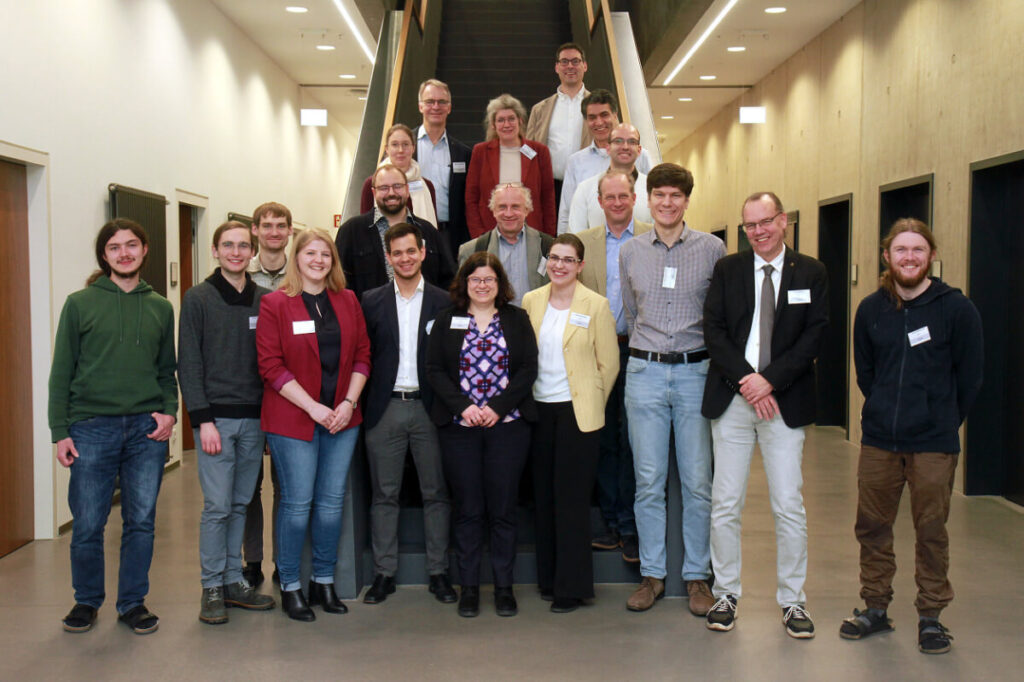
Photo: RPTU, Thomas Koziel